What If Your Family Could Invent Together—Without Any Experience?
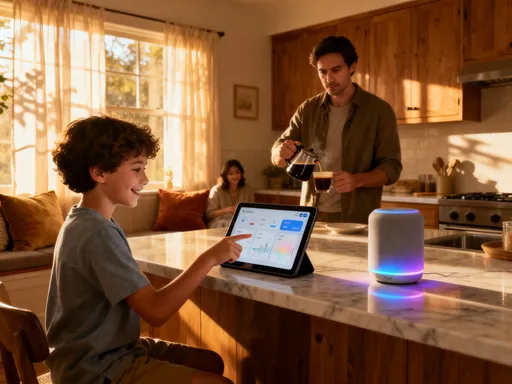
Imagine this: instead of everyone scrolling silently on their phones after dinner, your family gathers around a shared world of glowing inventions—dragons that breathe real mist, bridges that form under virtual footsteps, stories that unfold as you walk. It feels like magic, but it’s not. It’s an app. And it’s turning ordinary living rooms into labs of imagination. The best part? No one needs to be a tech whiz. Just curious. You don’t need coding skills, fancy gadgets, or hours of free time. All you need is a device you already own and the willingness to wonder, ‘What if?’ That simple question—so often silenced by routine—can spark something beautiful when we let it rise again, together.
The Quiet Crisis in Family Connection
Let’s be honest—how many of us have sat on the couch with our kids nearby, only to realize no one has spoken in twenty minutes? We’re all in the same room, but each of us is pulled into a different digital world. You’re checking emails, your teenager is texting friends, your younger child is watching videos on a tablet, and somehow, the space between you feels wider than ever. This isn’t uncommon. In fact, it’s become the norm in so many homes. We’ve traded conversation for convenience, connection for content.
And while it’s easy to blame the devices, that’s not the full story. Technology itself isn’t the problem—it’s how we use it. When screens become barriers instead of bridges, we lose something precious: the chance to really see each other. We miss the spark in a child’s eyes when they come up with a wild idea, the quiet pride of a teen who finally shares something they’ve been working on, the comfort of just being present without distraction.
But what if we could flip the script? What if, instead of pulling away, our devices became tools for building something together? Not just watching, but creating. Not consuming, but contributing. That shift—from passive to active, from isolated to connected—is where something truly special begins. And it’s not as far off as you might think. The tools are already in our hands. We just need to use them differently.
Enter Augmented Reality: More Than Just Games
You’ve probably seen augmented reality without even realizing it. Maybe you’ve used a filter that puts bunny ears on your face or makes it look like you’re standing in front of a tropical beach. Those are simple examples, but they hint at something bigger. Augmented reality, or AR, is like a digital layer that sits on top of the real world. It doesn’t replace what’s around you—it enhances it. Think of it like drawing on a window with a marker. The glass is still there, but now there’s something new on it that everyone can see.
Most people think of AR as just fun and games, and sure, it can be playful. But it’s also powerful. When a family uses an AR app together, they’re not just looking at a screen—they’re interacting with a shared space. A dinosaur might walk across the kitchen floor. A spaceship could hover above the coffee table. A fairy garden might bloom on the bookshelf. These aren’t just animations—they’re experiences that everyone in the room can see and respond to, almost like they’re real.
And here’s the beautiful part: this isn’t about competition or winning. It’s about co-creation. You’re not following a script or trying to beat a level. You’re making something new, together, in real time. One person might suggest a character, another adds a sound effect, a third builds a landscape for it to live in. It’s spontaneous, imaginative, and deeply engaging. The technology becomes invisible, and what’s left is connection.
Unlike video games that isolate players or shows that demand silence, AR invites conversation. It asks, ‘What should we build next?’ or ‘How can we make this better?’ It turns the living room into a shared studio, where everyone has a voice and every idea matters. That’s a big shift—from being entertained to being empowered.
Building Together, Learning Without Trying
Picture this: your daughter draws a strange creature on a tablet—part frog, part robot, with wings made of leaves. She taps ‘play,’ and suddenly, that creature appears on the coffee table, hopping and chirping. Your son grabs the tablet and adds a jetpack. You suggest it should sing when someone claps. Your partner names it ‘Zippy’ and decides it lives in the rainforest. Within minutes, you’ve built a world together—and no one felt pressured to get it ‘right.’
This kind of moment happens more often than you’d think when families start using AR apps designed for creativity. There’s no manual, no quiz, no right or wrong. Just the freedom to explore. And in that freedom, learning happens naturally. Kids pick up spatial reasoning by placing objects in 3D space. They practice storytelling by giving their creations personalities and homes. They learn cause and effect when they see how changing one detail changes the whole scene.
But it’s not just about the kids. Parents often find themselves getting pulled in, not because they have to, but because it’s genuinely fun. You might start by just watching, then offering a suggestion, then grabbing the tablet to add your own touch. Before you know it, you’re all leaning in, laughing, brainstorming. That’s the magic of AR—it doesn’t feel like learning. It feels like playing. And yet, so much is happening beneath the surface.
One mom told me, ‘I didn’t realize how much I’d stopped creating until I saw my kids inventing these wild characters. I missed that feeling of just making something for the joy of it.’ That’s the gift AR gives us—not just new tools, but a reminder of our own creativity. It helps us reconnect not only with our families but with parts of ourselves we may have forgotten.
How AR Sparks Hidden Strengths in Each Family Member
In most family activities, the same people tend to take the lead. One child is always the storyteller. Another is the artist. One parent does the planning. But AR changes that. Because it’s visual, open-ended, and low-pressure, it gives everyone a chance to shine—even those who usually hang back.
Take twelve-year-old Mia, for example. At school, she’s quiet, often overlooked. But when her family started using an AR app to build a fantasy world, Mia became the go-to designer. She created a floating castle with secret tunnels and glowing bridges. Her younger brother loved adding monsters, and her dad handled the music, but Mia was the architect. For the first time, her family saw her not as the shy one, but as the visionary.
Or consider eight-year-old Leo, who struggles with reading. He rarely speaks up during family discussions. But in AR play, he’s a natural storyteller. He doesn’t need to write anything—just speak, draw, and act. When he created a character called ‘Captain Sprout,’ a broccoli superhero who fights food waste, the whole family burst out laughing. His idea became their inside joke, then their favorite story. Suddenly, Leo wasn’t the kid who ‘has trouble with words.’ He was the funny, creative one.
That’s the power of AR: it levels the playing field. It doesn’t care about grades, social skills, or who talks the most. It rewards imagination, effort, and collaboration. And in doing so, it helps families see each other with fresh eyes. You start to notice strengths you never saw before. You realize your teenager isn’t just glued to their phone—they’re observing, designing, thinking. You see that your youngest isn’t just loud—they’re full of ideas waiting to be heard.
Turning Play into Life Skills
It’s easy to think of AR as just another screen activity, but what’s really happening in those moments is the quiet development of essential life skills. When your family debates whether the dragon should fly or swim, you’re practicing communication. When your son’s virtual bridge collapses for the third time, and he says, ‘Let’s try a different shape,’ that’s resilience. When your daughter suggests building a city where everyone helps each other, that’s empathy in action.
These aren’t lessons forced on kids. They’re lessons lived. And because they’re wrapped in play, they stick. Kids don’t feel like they’re being taught—they feel like they’re exploring. But over time, they’re learning how to work with others, how to handle setbacks, and how to think creatively. They’re learning that ideas can be improved, that feedback is helpful, and that teamwork makes things better.
One father shared, ‘We built a maze together, and it kept failing. My daughter wanted it to be super hard, but my son kept getting frustrated. We had to talk about balance—making it fun for everyone. It wasn’t just about the maze. It was about listening, compromising, finding a middle ground. I didn’t plan to teach that tonight, but we ended up doing it anyway.’
That’s the beauty of AR—it turns everyday moments into opportunities for growth. You’re not sitting down to ‘teach collaboration.’ You’re just trying to build a cool spaceship. But in the process, you’re modeling patience, asking for input, celebrating small wins. Those are the skills that matter most in life—skills that help kids navigate friendships, handle challenges, and believe in their ability to make a difference.
Making It Work in Real Life: Simple Ways to Start
Now, I know what you might be thinking: ‘This sounds great, but we’re busy. We barely have time to eat dinner together, let alone learn a new app.’ And that’s completely valid. The good news? You don’t need hours. You don’t need special equipment. You don’t even need to be tech-savvy.
Start small. Pick an AR app that’s designed for families—something with simple controls and fun prompts. Many are free or low-cost and work on devices you already own, like tablets or smartphones. Set aside just fifteen minutes a week. Maybe it’s after dinner on a Sunday, or during a quiet moment before bedtime. Call it ‘Family Invent Time’ or ‘Imagination Hour’—whatever feels right.
Begin with a simple idea. Try, ‘Let’s invent a pet that helps the planet.’ Or, ‘Design a home for a tiny dragon.’ Or even, ‘Build a world where kindness is magic.’ No pressure to make it perfect. In fact, the messier, the better. Let the kids take the lead. Laugh when things go wrong. Celebrate the silly ideas. The goal isn’t a masterpiece—it’s connection.
If someone’s hesitant, that’s okay. Just invite them to watch at first. You’d be surprised how quickly curiosity takes over. One mom said, ‘My husband rolled his eyes at first. But then our daughter made a cat that shoots rainbows, and he was the one who added the laser eyes. Now he’s the one asking, ‘When’s our next build session?’’
The key is consistency, not perfection. Even a few minutes a week can build momentum. Over time, it becomes something your family looks forward to—a shared ritual that’s both fun and meaningful.
A New Kind of Family Legacy
Years from now, your kids might not remember every movie you watched together or every meal you shared. But they’ll remember the time you built a castle in the sky that floated on clouds. They’ll remember naming a robot dog ‘Sir Barksalot’ and giving it a superhero cape. They’ll remember the laughter, the teamwork, the feeling of creating something that existed only because you did it together.
These moments become part of your family’s story. They turn into inside jokes, shared memories, a language of imagination that carries forward. And in a world that often feels fast and fragmented, that kind of connection is priceless. It’s not about replacing traditions like board games or cooking together. It’s about adding something new—a way to bond that speaks the language of today’s world while nurturing timeless values: curiosity, kindness, collaboration.
More than that, it sends a powerful message to every family member: your ideas matter. Your voice is heard. You belong. That’s a gift that lasts far beyond the screen. It shapes how kids see themselves—not as consumers of content, but as creators of worlds. It reminds adults that play isn’t just for children. It’s for anyone who still wonders, ‘What if?’
So here’s my invitation to you: don’t just use technology. reshape it. Turn your devices from distractions into tools for togetherness. Let your living room become a lab, your kitchen table a canvas, your family the inventors. You don’t need experience. You don’t need perfection. You just need to begin. Because the most beautiful creations aren’t made by experts. They’re made by people who care, who play, and who believe—just for a moment—that anything is possible.