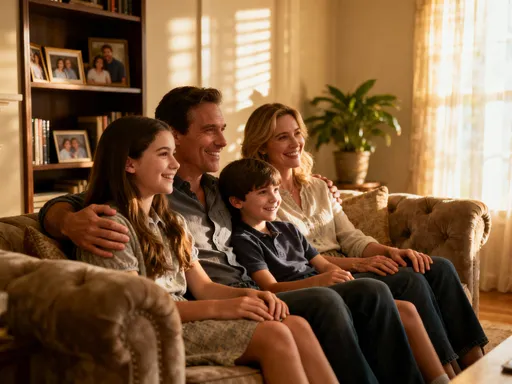
I’ll save those baby photos later — How one app finally kept our family’s memories alive
You know that promise you make every time your child does something precious—laughing for the first time, saying "Mama," taking wobbly steps? “I’ll save it later,” you say. But later never comes. The photos stay buried in your phone, and the moments fade. I felt the same—until a simple app helped me turn scattered snapshots into a shared family story we all cherish. It didn’t just organize memories. It brought us closer. And honestly, it changed how I see technology—not as something cold or complicated, but as a quiet companion that helps love stay visible, even on the busiest days.
The Moment I Realized We Were Losing More Than Photos
It was a Tuesday morning, rain tapping against the kitchen window, and my youngest, Noah, stood on the rug in his mismatched socks, holding a spoon like a microphone. He started singing—off-key, full of heart—his favorite song from the backyard bird feeder video he’d watched a hundred times. I grabbed my phone. Captured the whole thing. Thirty seconds of pure, unfiltered joy. And then I did what I always did: dropped the phone on the couch, thinking, I’ll save it later.
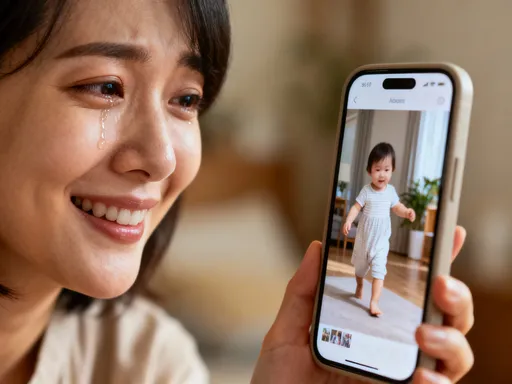
Later came and went. A week passed. Then two. One evening, while scrolling through my camera roll—hundreds of blurry breakfasts, half-finished grocery lists, and screenshots of recipes I’d never make—I stopped at that video. I watched it. Felt my chest tighten. And then I cried. Not because it was sad, but because it was so alive, and I hadn’t shared it. Not with my husband, not with my mom, not even with myself in any real way. It was just… data.
That night, I opened my daughter’s baby folder. Or tried to. There were 17 different albums named “Lily - maybe keep,” “Baby stuff - sort later,” “First bday??” None were complete. Some had duplicates. Others were missing key moments—her first bite of avocado, the day she climbed the stairs alone. I realized then: we weren’t just losing photos. We were losing pieces of our story. And not in some dramatic way, but slowly, quietly, one forgotten file at a time. The worst part? I wasn’t alone. I mentioned it to a friend over coffee, and she sighed, “Same. I have 4,000 photos from last summer. Haven’t looked at one since.” That’s when it hit me—this wasn’t a tech problem. It was a heart problem.
Why "Later" Never Comes — The Truth About Our Digital Habits
We tell ourselves we’ll organize “later,” but later is a myth. It doesn’t exist. And the reason isn’t laziness—it’s design. Not just the design of our phones, but the design of our lives. We’re juggling so much: meals, schedules, emotions, work, laundry that never ends. Adding one more task—“sort photos”—feels like asking someone running a marathon to stop and tie every shoelace perfectly.
There’s also something called decision fatigue. Every time you open your gallery, you’re faced with hundreds of images. Which ones matter? Which ones do you keep? Do you rename them? Where do they go? That mental load adds up. So we delay. We tell ourselves we’ll do it when we have “time.” But time doesn’t come. Instead, we fall into digital purgatory—photos stuck in the camera roll, videos buried under screenshots, voice notes from our kids’ first words lost in a sea of random memos.
I remember finding a voice memo from Lily’s third birthday. She was blowing out candles, giggling, and someone—probably me—whispered, “Make a wish!” I hadn’t listened to it in over a year. When I finally did, I froze. Her voice was higher then. So full of wonder. And I realized: if I hadn’t found it by accident, I might have never heard it again. That’s the danger of “later.” It doesn’t just delay memories. It risks erasing them.
And here’s the irony: we have more storage than ever. Clouds, hard drives, backup systems—they’re all there. But having space isn’t the same as having a system. A closet can be huge, but if your clothes are in a heap, you still can’t find your favorite sweater. We needed more than storage. We needed meaning. We needed something that fit into real life, not some idealized version of it.
Finding the Right Tool — Not Just Storage, But Meaning
I started looking for a solution—not just another cloud folder, but something that felt like ours. I tried a few apps. Some were too technical, full of settings and menus that made my head spin. Others looked nice but didn’t let me add stories, names, or voices. One even charged a fortune for basic features. I almost gave up. Then I found one that changed everything.
It wasn’t flashy. No bold colors or crazy animations. But it was smart in quiet ways. The first thing it did was ask: “Who matters most?” I tapped on Lily, then Noah, then my husband, my parents. From that moment, the app started recognizing faces automatically—not perfectly, but well enough. When I uploaded a photo, it would suggest, “This looks like Lily at the park?” And I’d say yes or no. Over time, it got better. It learned.
But the real magic was in the little things. I could add voice captions. So instead of typing “Lily’s first swing,” I could record myself saying, “This was the day she screamed ‘Higher! Higher!’ and didn’t let go.” That voice—my real voice, full of laughter—stayed with the photo. And when my mom opened the album, she could hear me. She told me it made her feel like she was there.
Another feature I loved: shared access. I invited my parents, my sister, and my husband. They could add their own photos, voice notes, even comments. My mom uploaded an old picture of me on a swing—same park, thirty years ago. She wrote, “You were fearless too.” That one moment—past and present, connected—made me cry. This wasn’t just an app. It was becoming our family’s living scrapbook.
And it didn’t ask me to do everything at once. It didn’t demand perfection. It celebrated small moments. A messy pancake breakfast. A dance party in pajamas. A rainy walk with mismatched boots. It treated those as important. Because they are.
How We Built a Habit — Tiny Steps That Stuck
The biggest lesson? You don’t need to do it all. You just need to start. I began with one photo a day. That’s it. Sometimes it was the only one I took. But I made it meaningful. I’d open the app, pick the moment that made me smile, and upload it. Often, I’d add a quick voice note: “Noah finally ate broccoli. Victory dance included.”
The app also backed up automatically. No more worrying about losing files. No more “I’ll save it to the cloud later.” It just happened. And once a week, it sent a gentle nudge: “Remember this?” with a photo from the same week last year. One time, it showed Lily covered in mud, laughing after falling into a puddle. I showed the kids. We all laughed. Then my husband said, “We should watch these every Sunday.” And just like that, we started a new ritual.
What surprised me was how the app adapted to us, not the other way around. I didn’t have to change my life. I didn’t need special skills. It met me where I was—tired, busy, sometimes overwhelmed. And it made remembering feel easy. Even joyful. I stopped thinking of it as “organizing.” I started thinking of it as “sharing.”
There was one moment that sealed it. I was putting the kids to bed, and Lily said, “Can we see the beach video?” I opened the app, pulled up our summer trip, and played the clip of her building a lopsided sandcastle while seagulls circled. She watched, quiet, then said, “I was happy that day.” That’s when I realized: this wasn’t just about photos. It was about helping them see their own joy. Their growth. Their place in our story.
More Than a Timeline — A Shared Family Language
Somewhere along the way, something beautiful happened. The app became more than a place to store memories. It became a way we talk to each other. My parents started adding voice messages. “Hi, sweethearts! Grammy loves you!” They’d record it while walking the dog or making tea. The kids would play them like little audio hugs.
We also started creating themed albums. “First Bites” with all the funny faces from baby food disasters. “Giggle Moments” with videos of uncontrollable laughter. “Rainy Day Adventures” with indoor obstacle courses and blanket forts. Every few weeks, we’d have a family movie night—popcorn, pajamas, and a curated playlist from the app. The kids would vote on themes. Last week, it was “Dad’s Dance Fails.” He pretended to be offended. He wasn’t.
But the deeper gift was identity. Lily started recognizing her younger self. “That’s me when I couldn’t tie shoes,” she’d say. “But now I can.” Noah points to videos and says, “I was small then.” These aren’t just observations. They’re the building blocks of self-worth. Of belonging. Of knowing you’re seen.
And for my parents, it’s been a bridge. They live three hours away. Before, they’d get occasional updates—maybe a text, a photo. Now, they’re part of the flow. They see the little things. They hear the voices. They feel connected. My mom told me, “It’s like I’m there, even when I’m not.” That’s powerful. Technology, used right, doesn’t replace presence. It extends it.
When Life Gets Hard — How Memories Became Emotional Anchors
Last winter, my father had a health scare. Nothing life-threatening, but enough to shake us. For weeks, the house felt heavy. Worries hung in the air like fog. One night, I couldn’t sleep. I opened the app, not looking for anything in particular. I just wanted to feel something warm.
I clicked on a video from the summer—a picnic at the lake. Dad was teaching Lily how to skip stones. She kept throwing them straight down. He laughed, knelt beside her, and said, “Try like this, sweetheart.” Then he helped her flick her wrist. She did it. One skip. Then two. She jumped up and down. “I did it! Grammy, I did it!” The joy in her voice. The pride in his eyes. I watched it three times. And I cried. But it wasn’t sad crying. It was relief. It was love.
That moment reminded me: we don’t need perfect memories to heal. We need real ones. The messy, ordinary, unposed ones. The ones where someone’s hair is a mess, or the dog steals a sandwich, or a child mispronounces a word. Those are the moments that ground us. That remind us who we are. Who we’ve always been.
During that tough time, we started revisiting old videos more often. Not to escape, but to remember what matters. To feel anchored. The app didn’t fix anything. But it held space for comfort. It became a digital hearth—quiet, warm, always there. And in moments when words failed, a simple video could say everything.
Your Turn — Start Small, Stay Connected
If you’re sitting there thinking, “I don’t have time,” I get it. You’re tired. You’re doing your best. But here’s what I’ve learned: you don’t need time. You need one moment. One photo. One voice note. That’s enough to begin.
Pick one memory that made you smile today. Maybe it was your child’s silly face at breakfast. Maybe it was your dog nudging your hand for attention. Upload it. Add a quick caption. Invite one person—your mom, your sister, your partner—to join you. You don’t have to do it every day. You don’t have to be perfect. Just start.
Set a weekly reminder if you need to. Or let the app nudge you. Let it be easy. Let it be joyful. And when you watch that old video a year from now, and your child says, “That was me?”—you’ll know you did something quiet but powerful. You kept love alive.
Technology doesn’t have to be cold. It doesn’t have to be complicated. Used with heart, it can help us stay close. Help us remember. Help us feel seen. And in a world that moves too fast, that’s not a small thing. It’s everything. So go ahead. Take that one photo. Save that one moment. Because later might not come. But you can. Right now. And that’s enough.