Tired of Feeling Awkward in Group Chats? This Changed How I Connect Forever
Have you ever stared at your phone, unsure how to reply in a group message? You’re not alone. That quick ping can spark anxiety—saying too much, too little, or the wrong thing. I used to overthink every emoji. But over time, I found small, simple ways to feel more confident. It wasn’t about mastering tech—it was about learning to belong. Let me share how I went from hesitant to at ease, one message at a time.
The Overwhelming First Message
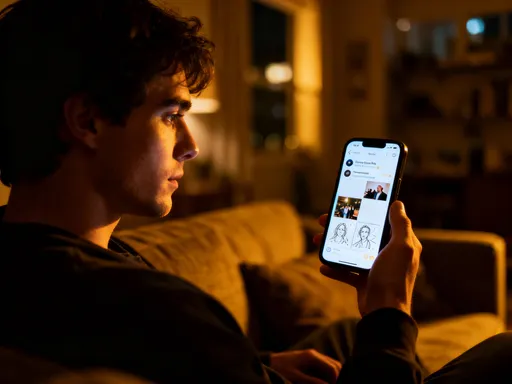
It started with a simple notification. A friend had created a group chat for our weekend hike—just five of us, all people I liked and trusted. But when I saw the flurry of messages flying back and forth before I even had a chance to read them, my chest tightened. One person shared a packing list, another cracked a joke, someone else dropped three voice notes in a row. I stared at the screen, my thumb hovering over the keyboard. What should I say? Was it too late to chime in? Would a simple 'excited!' seem lame?
That moment stayed with me. It wasn’t the first time I’d felt this way, and it wouldn’t be the last. Group chats, designed to bring us closer, often do the opposite. They move fast, they assume familiarity, and they rarely pause for anyone. I’d mute the group within hours, telling myself I’d check back later. But later never came. I felt left out, but also relieved—relieved not to have to perform. I realized then that my hesitation wasn’t about the technology. It was about belonging. It was about not knowing where I fit in the rhythm of the conversation. And I wasn’t alone. So many women I’ve talked to—mothers, professionals, volunteers, friends—have shared the same quiet dread when that little bubble pops up with three names inside.
But here’s what I’ve learned: that first message doesn’t have to be perfect. In fact, it doesn’t have to be anything at all. The pressure we feel? It’s self-imposed. No one is grading our replies. No one is waiting for us to be the funniest, the most helpful, or the first to respond. The chat isn’t a test. It’s a space. And we’re allowed to step into it slowly, quietly, on our own terms. The goal isn’t to catch up. It’s to show up—eventually, gently, authentically.
Learning the Rhythm of Conversation
Have you ever walked into a room where a conversation is already in full swing? You know the feeling—smiles, laughter, inside jokes flying around, and you’re standing there with your coat still on, unsure if you should jump in or just listen? Group chats feel exactly like that. Except in real life, you can smile and nod. On screen, silence can feel like invisibility.
What changed for me was shifting my mindset. Instead of seeing the chat as something I had to 'join,' I started seeing it as something I could *observe*. I stopped pressuring myself to respond right away. I let the messages flow. I noticed who usually started the jokes, who shared the practical details, who responded with a simple '❤️' or 'OMG yes.' I began to see patterns—like how one friend always sent a voice message when she was cooking, or how another waited until evening to reply, just like me.
This wasn’t passive. It was preparation. By watching, I learned the unspoken rules of our little digital table. I realized that not every message needs a response. Some are just sparks—meant to fly, not to be caught. A funny meme doesn’t require a witty comeback. A shared article doesn’t demand a deep analysis. And that’s okay. In fact, it’s more than okay—it’s freeing. I gave myself permission to just *be* in the chat, even if I wasn’t typing. I muted the group during work hours, read messages at night with a cup of tea, and only replied when something truly resonated. And slowly, my anxiety faded. Because I wasn’t failing to participate. I was learning how to belong in my own way.
Think of it like a potluck dinner. Not everyone brings the main dish. Some bring napkins. Some bring a dessert. Some just bring their presence. And that’s enough. In group chats, you don’t have to bring the fireworks. You just have to bring *you*—when you’re ready.
Embracing the Power of the Small Reply
I used to think that to be seen, I had to say something memorable. A clever joke. A useful tip. A heartfelt comment. But the truth? Most of what we say in group chats isn’t remembered at all. And that’s not a bad thing. Because connection isn’t built on brilliance. It’s built on consistency. On showing up, again and again, in small, steady ways.
The first time I typed 'Same here!' in response to a friend saying she was too tired to cook, something shifted. It was such a tiny reply. Two words. No emoji, even. But she replied with a '🙌' and someone else said, 'Same! Soup it is!' That little exchange made me feel seen. Not because I’d said anything profound, but because I’d been honest. And my honesty had created space for others to be honest too.
From then on, I started giving myself permission to keep it simple. 'Me too.' 'Love this.' 'So true.' 'Need this weekend.' These aren’t groundbreaking statements. But they’re warm. They’re human. They say, 'I’m here. I’m listening. I feel that too.' And over time, those tiny replies built a quiet presence. I wasn’t the loudest voice, but I was a steady one. And that mattered.
Think about it—when someone shares a photo of their garden, do they need a detailed critique? No. A simple 'This is beautiful!' means the world. When a friend vents about a long day, do they need a solution? Not always. A 'That sounds exhausting. Sending you tea and calm' can be enough. These micro-moments of acknowledgment are the glue of digital connection. They don’t require effort. They require presence. And the more I leaned into that, the less pressure I felt. I wasn’t performing. I was participating. And that made all the difference.
Finding Your Voice Without Forcing It
There was a moment—small, unplanned—that changed everything for me. We were planning a weekend getaway, and someone asked, 'What’s one thing you can’t travel without?' I didn’t think. I just typed: 'My lavender sleep spray. I spray it on my pillow, and suddenly, I’m not on a lumpy hotel bed. I’m at home.' I didn’t expect much. But within seconds, three replies popped up. 'I need this!' 'Genius.' 'You just saved my next flight.'
That tiny, personal detail—a small habit, really—had sparked warmth. It wasn’t life-changing. It wasn’t even that unique. But it was *mine*. And by sharing it, I had offered a piece of my real life. Not a highlight. Not a performance. Just a simple truth. And people responded to that.
That’s when I realized: my voice wasn’t something I had to manufacture. It was already there. It was in the way I described things, the small rituals I valued, the quiet humor I used with my kids. I didn’t need to be louder. I just needed to be *real*. So I started sharing more of those little moments. A photo of my coffee mug on a rainy morning. A note about how I finally organized my pantry. A tired thought at 9 p.m.: 'I’m not a late-night person. Why do I keep pretending I am?'
And something beautiful happened. The chat felt warmer. More intimate. Not because we were sharing deep secrets, but because we were sharing *ourselves*. Technology didn’t create that intimacy. It just gave us the space to practice it. And the more I showed up as me—the imperfect, tired, joyful, real me—the more comfortable I felt. I wasn’t trying to fit in anymore. I was simply *being* in. And that, I’ve learned, is where true connection begins.
Using Features to Reduce Pressure
Here’s a secret I didn’t know for years: you don’t have to respond right away. In fact, most of us don’t. But the design of messaging apps makes it feel like we should. That little 'read' receipt? It can feel like a spotlight. 'You’ve seen this. Now act.' But here’s the truth: you’re in control. And modern apps come with tools—quiet, powerful tools—that can help you reclaim that control.
For me, the game-changer was muting the chat. Not leaving it. Not ignoring it. Just muting it. I turned off notifications for one group that tended to blow up during work hours. I didn’t disappear. I just chose when to engage. I’d open the app during my lunch break or after the kids were in bed. And suddenly, the pressure was gone. I could read at my own pace. Respond when I wanted to. No more frantic scrolling trying to catch up. Just calm, intentional connection.
I also started using voice messages—something I used to avoid. Typing after a long day felt like work. But speaking? That felt natural. So now, when a friend shares exciting news, I’ll send a quick voice note: 'Oh my gosh, that’s amazing! Tell me more!' It takes ten seconds. It sounds warm. And it feels more personal than any emoji could. My friend Sarah told me, 'I love your voice messages. They feel like you’re right here with me.' That meant more than any text ever could.
And then there’s scheduling messages. I use it all the time. If I think of something during the day but know I won’t be free to reply, I’ll type it out and schedule it for the evening. It’s like leaving a note for my future self. 'Don’t forget to say thank you to Lisa for the recipe.' These small tech features aren’t about efficiency. They’re about emotional care. They help me show up without burning out. And that, I’ve realized, is one of the greatest gifts technology can offer—not speed, but *sustainability*.
Growing Confidence Beyond the Screen
What surprised me most wasn’t just how much easier group chats became. It was how that ease began to spill over into the rest of my life. I noticed it first in small ways. At a school meeting, when someone shared an idea I liked, I didn’t hesitate to say, 'I agree—great point.' At a coffee date, when a friend mentioned feeling overwhelmed, I didn’t rush to fix it. I just said, 'That sounds really hard. I’ve been there.' And I meant it.
My digital confidence had quietly rebuilt my real-world confidence. By practicing presence in the chat—by learning to listen, to respond honestly, to trust my voice—I had also learned to do those things in person. I became a better listener. Not the kind who waits to talk, but the kind who truly hears. I stopped feeling like I had to have the right answer. I started valuing just being there.
And my friendships deepened. Because I wasn’t just showing up for the big moments. I was showing up for the small ones. A text to say I was thinking of them. A quick call after a tough day. A shared meme that said, 'This is us.' These tiny acts of care didn’t require grand gestures. They required attention. And attention, I’ve learned, is one of the rarest and most powerful forms of love.
Technology didn’t change who I am. But it gave me a safe space to practice being myself. And that practice changed everything. I’m not the same woman who stared at her phone, afraid to type a single word. I’m someone who knows her worth isn’t measured by how quickly she replies or how funny she is. It’s measured by how present she is. And that’s a lesson that extends far beyond the screen.
A New Kind of Belonging
Looking back, I see that my journey wasn’t really about mastering group chats. It was about learning to trust myself. To believe that my presence matters—even when it’s quiet. That my voice has value—even when it’s simple. That I belong—just as I am.
Today, when a new message pops up, I don’t feel that old knot in my stomach. I might not reply right away. I might just read and smile. Or I might send a voice note, a photo, or a single heart emoji. And that’s enough. Because I’ve learned that connection isn’t about performance. It’s about participation. It’s about showing up, again and again, in ways that feel true to you.
Every message we send is a small act of courage. It says, 'I’m here. I see you. I’m part of this.' And if you’re still learning how to belong—in chats, in friendships, in life—know this: you’re not behind. You’re not broken. You’re simply growing. And every time you choose to respond, to share, to stay in the conversation, you’re not just connecting with others. You’re reconnecting with yourself.
So take your time. Mute when you need to. Reply in your own voice. Use the tools that help you feel calm, not overwhelmed. And remember: you don’t have to be the loudest to be seen. You don’t have to be the first to matter. You just have to be you. And that, my friend, is more than enough.