Passing Down More Than Money: How Families Keep Culture Alive Through Smarter Financial Planning
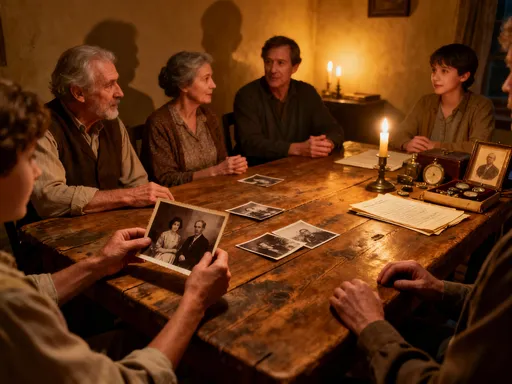
Inheritance isn’t just about assets—it’s about values, traditions, and the stories we carry forward. Many families assume estate planning is only for the wealthy or that it focuses solely on dividing property and bank accounts. But in reality, financial planning can be one of the most powerful tools for preserving cultural identity across generations. Without intention, wealth transfers may secure comfort, but they often fail to protect the deeper elements of who we are—our language, customs, and shared history. Thoughtful financial strategies do more than safeguard money; they can actively sustain heritage, ensuring that future generations inherit not just resources, but roots.
The Hidden Cost of Ignoring Cultural Inheritance
When families begin estate planning, the conversation typically centers on wills, trusts, and tax efficiency. These are essential, but focusing exclusively on financial outcomes risks overlooking a far greater loss: the erosion of cultural identity. Across generations, traditions quietly fade—not because they are unwanted, but because no mechanism exists to support them. A family may pass down a vacation home, only to see it sold within a decade because no funds were allocated for upkeep or no emotional connection remained. In other cases, ancestral languages disappear because younger members never had access to formal learning or cultural immersion opportunities. These losses are not inevitable—they are the result of planning that treats wealth as an end, rather than a means to sustain identity.
Consider the experience of a multigenerational family of Italian descent living in the American Midwest. Over time, family gatherings grew smaller, Sunday meals became rare, and the regional dialect once spoken at home faded into memory. When the matriarch passed, her will distributed assets equally among her children, but no provisions existed to maintain the traditions she cherished. The family’s connection to its roots weakened, not from lack of love, but from lack of structure. This is a common story. Studies in intergenerational wealth show that while 70% of families lose their wealth by the second generation and 90% by the third, even fewer retain a strong cultural narrative. The emotional cost is significant—children grow up disconnected from their ancestry, unsure of where they come from or what their family once stood for.
The problem lies in defining legacy too narrowly. Many equate inheritance with financial security, yet the most enduring legacies are often intangible. A grandmother’s recipe book, a grandfather’s stories of immigration, the songs sung at family celebrations—these carry more emotional weight than any bank statement. When financial planning ignores these elements, it fails its deeper purpose. The solution is not to abandon wealth transfer, but to expand it. By integrating cultural goals into financial structures, families can ensure that values are passed down alongside valuables. This requires a shift in mindset—from asking “How much will they get?” to “What will they remember?”
Bridging Finance and Heritage: Why Money Should Serve Memory
Money is often seen as a neutral tool—something to be saved, invested, or spent. But in the context of family legacy, financial decisions are never neutral. They shape behavior, reinforce priorities, and signal what a family truly values. When structured with intention, financial instruments can become active agents of cultural preservation. Trusts, foundations, and donor-advised funds are not just vehicles for wealth management—they can be designed to fund language programs, support traditional arts, or maintain ancestral properties. The shift is from passive inheritance to active stewardship, where money serves memory rather than merely accumulating.
Take, for example, a family of Mexican heritage living in Texas. Over several generations, they built a successful agricultural business. When planning their estate, they established a family foundation with a dual mission: to provide financial support to descendants and to preserve their cultural traditions. A portion of the foundation’s annual disbursements is dedicated to sponsoring a summer camp where grandchildren learn traditional dances, cooking, and the Spanish dialect spoken by their ancestors. Another allocation funds oral history recordings, ensuring elders’ stories are preserved. Because the foundation is structured as a legal entity with clear governance, it continues to operate across generations, guided by shared values rather than individual whims.
This model illustrates a critical principle: financial tools gain deeper meaning when tied to purpose. A trust that simply releases funds at age 25 may prevent reckless spending, but a trust that funds a cultural pilgrimage or supports enrollment in a heritage language course creates lasting impact. Similarly, a donor-advised fund can be used to make annual contributions to a community center that hosts cultural festivals, reinforcing the family’s connection to its roots. These strategies do not require vast wealth—what matters is clarity of intent and consistency of action. By aligning financial mechanisms with cultural goals, families transform money from a static asset into a dynamic force for continuity.
The psychological benefits are equally important. When younger generations see that their family’s wealth supports meaningful traditions, they develop a stronger sense of belonging. They are more likely to engage with their heritage not out of obligation, but out of pride. This emotional investment increases the likelihood that traditions will endure, even as lifestyles evolve. Financial planning, when done thoughtfully, becomes an act of love—an investment not just in comfort, but in identity.
Designing Legacy Accounts That Honor Tradition
Not all financial accounts serve the same purpose. While standard savings or investment accounts focus on growth and liquidity, legacy accounts can be designed to reflect cultural values and intergenerational goals. These specialized vehicles go beyond simple wealth transfer by embedding conditions that encourage participation in family traditions. For instance, a multi-generational account might release funds when a beneficiary completes a cultural milestone, such as learning a native language, participating in a traditional ceremony, or volunteering with a heritage organization. These incentives are not about control, but about connection—using financial support to deepen engagement with identity.
One effective model is the “cultural incentive trust,” which has gained popularity among families seeking to preserve intangible heritage. In this structure, a trustee—often a respected family elder or independent advisor—oversees distributions based on predefined criteria. A young adult might receive a portion of funds upon completing a course in their ancestral language, while another might access support for traveling to a family’s country of origin to study traditional crafts. The conditions are not punitive; they are invitations to engage. The key is to balance guidance with autonomy, ensuring that the next generation feels empowered, not policed.
Designing such accounts requires careful legal and financial planning. It is essential to work with estate attorneys and financial advisors who understand both the technical aspects and the emotional dimensions of legacy building. Trust documents must be clear but flexible, allowing for interpretation as cultural contexts change. For example, a provision requiring attendance at a yearly family gathering might be adapted if geographic distance makes travel difficult—perhaps participation via video call or contribution to a digital archive could fulfill the requirement. The goal is not rigidity, but continuity.
Another consideration is the role of trustees. Selecting individuals who embody the family’s values and are committed to its long-term vision is crucial. Trustees should be more than financial managers—they should be cultural stewards. Regular reporting and family meetings can ensure transparency and prevent misunderstandings. When done well, legacy accounts become more than financial tools—they become living records of what the family stands for, evolving alongside its members while holding fast to its core identity.
The Role of Family Councils in Financial and Cultural Alignment
Legacy planning should not be a solo endeavor. Decisions made in isolation, even with the best intentions, often fail to account for diverse perspectives within a family. This is where family councils play a vital role. A family council is a structured forum where members across generations come together to discuss financial goals, cultural values, and long-term vision. Guided by a facilitator, elder, or professional advisor, these meetings create space for open dialogue, ensuring that inheritance planning reflects collective wisdom rather than individual preferences.
One East Asian family with roots in Japan established a family council after noticing a growing disconnect between their American-born grandchildren and their cultural heritage. The older generation wanted to preserve traditions like tea ceremonies, calligraphy, and ancestral festivals, but younger members expressed little interest. Rather than imposing expectations, the family began holding annual meetings to discuss their shared future. Over time, these conversations led to the creation of a family mission statement and a cultural preservation fund. The council also developed a rotating leadership model, allowing younger members to take on meaningful roles. As a result, engagement increased—not because traditions were enforced, but because they were co-created.
Family councils help prevent conflict by fostering transparency and shared ownership. When all voices are heard, heirs are less likely to feel alienated or resentful. Disagreements are inevitable, especially when generations have different lifestyles or values, but councils provide a constructive way to navigate them. For example, a younger member might question the relevance of funding a traditional festival in a modern context. Through dialogue, the family might agree to adapt the event—incorporating contemporary music or digital storytelling—while preserving its core meaning. This kind of flexibility strengthens cultural continuity rather than undermining it.
Regular meetings also allow families to review and update their plans. Financial and cultural landscapes change, and what works today may not work in 20 years. A council can assess whether legacy accounts are still serving their purpose, whether trustees need to be replaced, or whether new traditions should be recognized. This ongoing process ensures that inheritance planning remains dynamic and responsive, not frozen in time. Ultimately, family councils do more than align finances with culture—they build relationships, deepen trust, and create a shared sense of purpose that outlasts any single document.
Preserving Language and Art Through Targeted Funding
Culture lives in expression. Language, music, dance, and craftsmanship are not just activities—they are living traditions that carry history, emotion, and identity. Yet these intangible forms of heritage are often the first to disappear when families assimilate or disperse. Without active support, traditional arts can become museum pieces rather than lived experiences. This is where targeted funding becomes essential. By creating dedicated financial mechanisms—such as micro-endowments, grants, or scholarship funds—families can ensure that cultural expression continues across generations.
One Native American family established a small endowment to support the teaching of their indigenous language, which was at risk of extinction. The fund pays for language classes, develops digital learning tools, and sponsors immersion camps for youth. Because the principal is preserved and only the earnings are spent, the support is sustainable over time. Similarly, a family of West African descent created a grant program for descendants interested in learning traditional drumming and dance. Recipients receive funding to study with master artists, attend cultural festivals, and perform at family gatherings. These investments do more than preserve skills—they strengthen identity and pride.
The key to success is sustainability. One-time gifts may spark interest, but ongoing support is needed to create lasting impact. Micro-endowments, which can start with as little as $10,000, generate annual income that funds cultural activities without depleting the principal. Families can structure these endowments through community foundations or private trusts, ensuring professional management and accountability. Another model is the “cultural fellowship,” where funds are awarded competitively to descendants who propose meaningful projects—such as documenting family recipes, creating a documentary, or reviving a traditional craft. This approach encourages initiative while honoring heritage.
Measuring impact can be challenging, as cultural preservation is not easily quantified. However, families can track participation rates, skill development, or the number of traditions actively practiced. More importantly, they can observe shifts in engagement—do younger members speak more proudly of their roots? Are they teaching traditions to their own children? These qualitative signs indicate success. By funding expression with intention, families ensure that culture remains alive, not as a relic of the past, but as a vibrant part of everyday life.
Avoiding the Trap of Over-Formalization
While structure is important, too much rigidity can undermine the very traditions it seeks to preserve. Some families, in their desire to protect heritage, create overly complex rules that turn cultural participation into a bureaucratic obligation. A trust may require heirs to attend monthly ceremonies, submit progress reports on language learning, or seek approval for every cultural expense. While well-intentioned, such rules can breed resentment, especially among younger generations who value autonomy. Tradition should inspire, not constrain. The goal is not compliance, but connection.
History offers cautionary tales. One European-American family established a detailed cultural trust requiring descendants to host annual heritage dinners with specific menus, attire, and rituals. Over time, the event became a source of stress rather than joy. Younger members viewed it as a chore, and attendance declined. Eventually, the tradition faded—not because the family lost interest, but because it had been stripped of spontaneity and meaning. The lesson is clear: over-formalization kills spirit. Financial structures should guide, not dictate. They should provide support, not surveillance.
The solution lies in flexibility. Families can build adaptability into their plans through sunset clauses, periodic reviews, and rotating governance. A sunset clause allows certain rules to expire after a set number of years, giving future generations the freedom to reinterpret traditions. Periodic reviews, conducted by a family council, ensure that financial mechanisms remain relevant. Rotating trusteeship prevents power from being concentrated in one branch of the family. These practices honor the past while respecting the future.
Authenticity matters more than perfection. A family gathering may look different in 2050 than it did in 1950, and that is okay. What matters is the intention behind it—the desire to stay connected, to remember, to belong. Financial plans should support that intention without demanding uniformity. By designing structures that are guiding rather than governing, families ensure that tradition evolves rather than expires.
Building a Legacy That Lasts Beyond Wealth
True inheritance is not measured in net worth, but in continuity. A well-funded trust may provide comfort, but it cannot replace the warmth of a shared story, the pride in a preserved language, or the joy of a tradition passed from hand to hand. The most enduring legacies are those that enrich not just lives, but souls. Financial planning, when aligned with cultural intention, becomes more than a technical exercise—it becomes an act of love, a promise to future generations that they will know who they are and where they come from.
The tools exist—trusts, endowments, family councils, legacy accounts—but they are only effective when paired with conversation, commitment, and emotional investment. Money alone cannot sustain culture. It takes storytelling, shared meals, patient teaching, and the courage to adapt. The families who succeed in preserving their heritage are not those with the most wealth, but those who plan with purpose and act with heart.
As generations pass, the details of financial plans may fade, but the values they upheld will remain. A child who learned her grandmother’s songs because a fund made lessons possible will pass them on to her own children. A young man who traveled to his ancestors’ village because his family supported cultural journeys will carry that experience for life. These moments are the real return on investment—not in dollars, but in depth.
In the end, inheritance is not about what we leave behind, but what we carry forward. When money serves meaning, it transforms from asset to legacy. And in that transformation, families discover that the greatest wealth is not what we own, but who we are.